

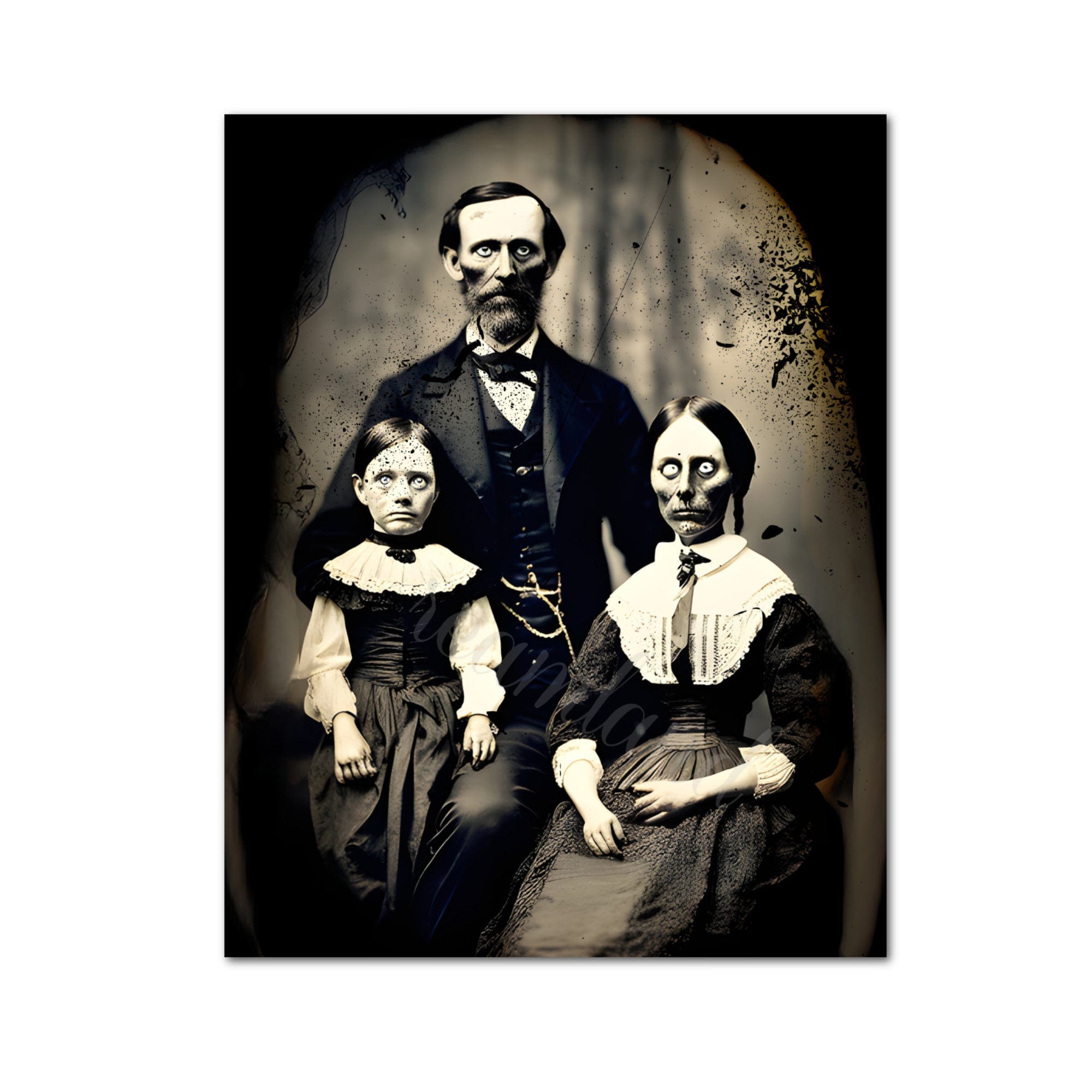
Technically, neither of these movies is a “horror” movie. There is no slashing psycho or demonic presence lurking in the dark. There is something arguably worse. The repository of our deepest fears and insecurities, the origin of so many of our self-doubts and traumas: family. If you think the family you grew up with is a mess (mine certainly was), you can probably take comfort that your family is not quite as fucked up as the ones in these two movies. Even if your family is this messed up, it is probably less murderous.
Subscribe to never miss a post!
A History of Violence
🦛🦛🦛🦛
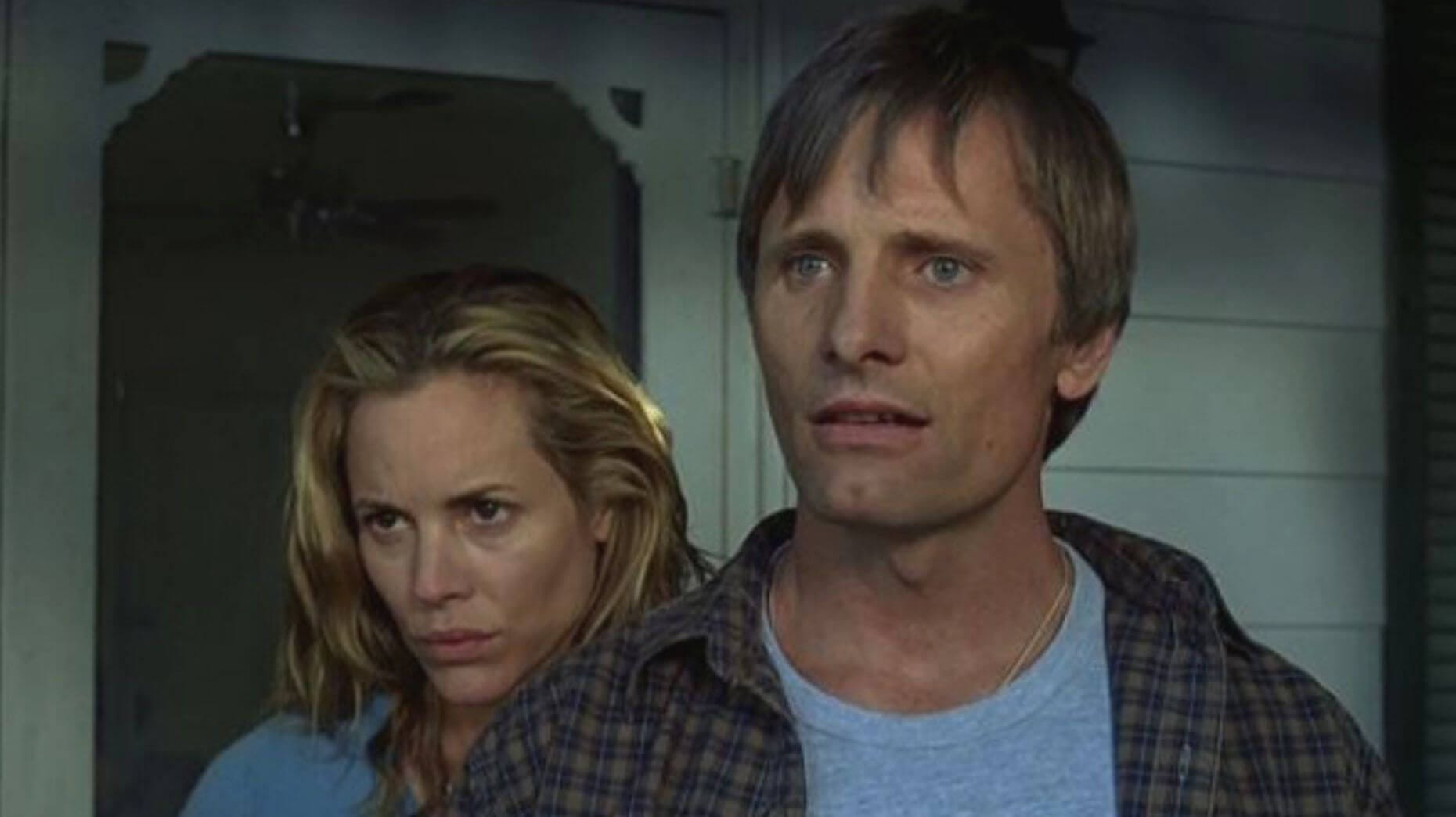
In some ways A History of Violence is the most accessible David Cronenberg movie because on the surface it looks so normal. Set in the heartland of America it stars the family Stall. Father/husband Tom (Viggo Mortensen) runs a local diner and is a good all American guy. Mother/wife Edie (Maria Bello) is a local girl, former cheerleader, now a lawyer. Son Jack (Ashton Holmes) is a teen having typical experiences for someone who is not on the top rung of high school hierarchy. Daughter Sarah (Heidi Hayes) is around 8, sweet and not much explored as a character but vital late late in the movie. If you know Cronenberg’s work you might wonder if I’m describing the wrong movie. I’m not. As the title suggests there is violence and Tom Stalls idyllic small town life comes crashing down when two evil men visit his diner one night. Tom sensing the very real danger they present reacts. Doing so he unleashing terrible violence which Cronenberg is careful to show as graphically as possible. The scene is brutal. The brutality is entirely intentional. What Croenberg shoots is not action movie violence, not even the kind that pretends to be realistic but is stylized to convey cool instead of horror. The violence here happens so fast you may not fully catch it on the first watch. I have seen this movie a few times and it’s worth noting that Tom’s response is not the response of someone with training. It is the action of someone with experience being violent. It is an significant distinction. Who the hell was that? It is a question that Tom’s wife Edie and son Jack will spend the rest of the movie asking. Tom is the headliner but they are the protagonists. Cronenberg regularly works in a variety of genres. Through them all he consistently explores themes of identity, and self. Who we are, how the past shapes us, whether anyone can really change, nurture vs. nature are all questions explored in this movie. It is endlessly fascinating. Initially Tom’s violence, seen as heroism by the town prompts no questions. That starts to unravel when some dangerous looking men come to town days after all the publicity about Tom’s heroism hits the out of town papers. Their leader Carl Fogarty (Ed Harris) insists on calling Tom, Joey. Tom gives a shaky smile that fools no one and insists Carl has him mixed up with someone else. Harris who is one of my favorite actors reveals a menace I have not seen in previous roles. Tom’s obvious lie does not fool Carl. Edie who witnesses the exchange is also to smart to believe Tom’s blatant lies but desperately wants to. Bello a gifted actress reveals the inner struggle of Edie who moves from reluctance, to wishing she could wake from this living nightmare, to anger. Things escalate quietly as Carl and his crew circle the Stall family like predators stalking prey. That they are always polite and stay on the right side of the law makes their presence more threatening. Through it all Edie and Tom work to keep their concerns from their children and Edie works to keep her faith in Tom. Parallel to these events Jack is experiencing his own struggles at school in the wake of his fathers heroics. At home he can tell something is wrong and is struggling to understand why his loving father is pulling away from him. It is a lot for a young adolescent and it comes to a violent head. Holmes shows himself a talent to watch. The truth as the title suggests is in Tom’s past which he will have to acknowledge and confront. I won’t spoil the surprise with details but part of that past includes William Hurt who gives a performance unlike any I have seen from him, as he once again proves how talented an actor he is. Cronenberg who bailed on Hollywood early in his career to stay in his native Canada regularly gets major stars in his casts and he gets the best out of the actors that work with him. That is true of each of the stars here including Mortensen who would become a regular feature in Cronenberg movies. His performance of Tom who slides from likable to wimpish and flakey to something else entirely is brilliant. I find myself returning to this movie mentally and physically again and again. I love the performances and the flawless direction. I love that Croneneberg asks fascinating questioners and refuses to provide easy answers. Each time I re-watch it I find some new nuance and observe some elements in a new way in this endlessly fascinating film.
Where to watch
Streaming on Starz. Rent from the usual suspects: Amazon, Apple, and YouTube.
Thoughts? Feel free to weigh in!
Killer Joe
🦛🦛🦛
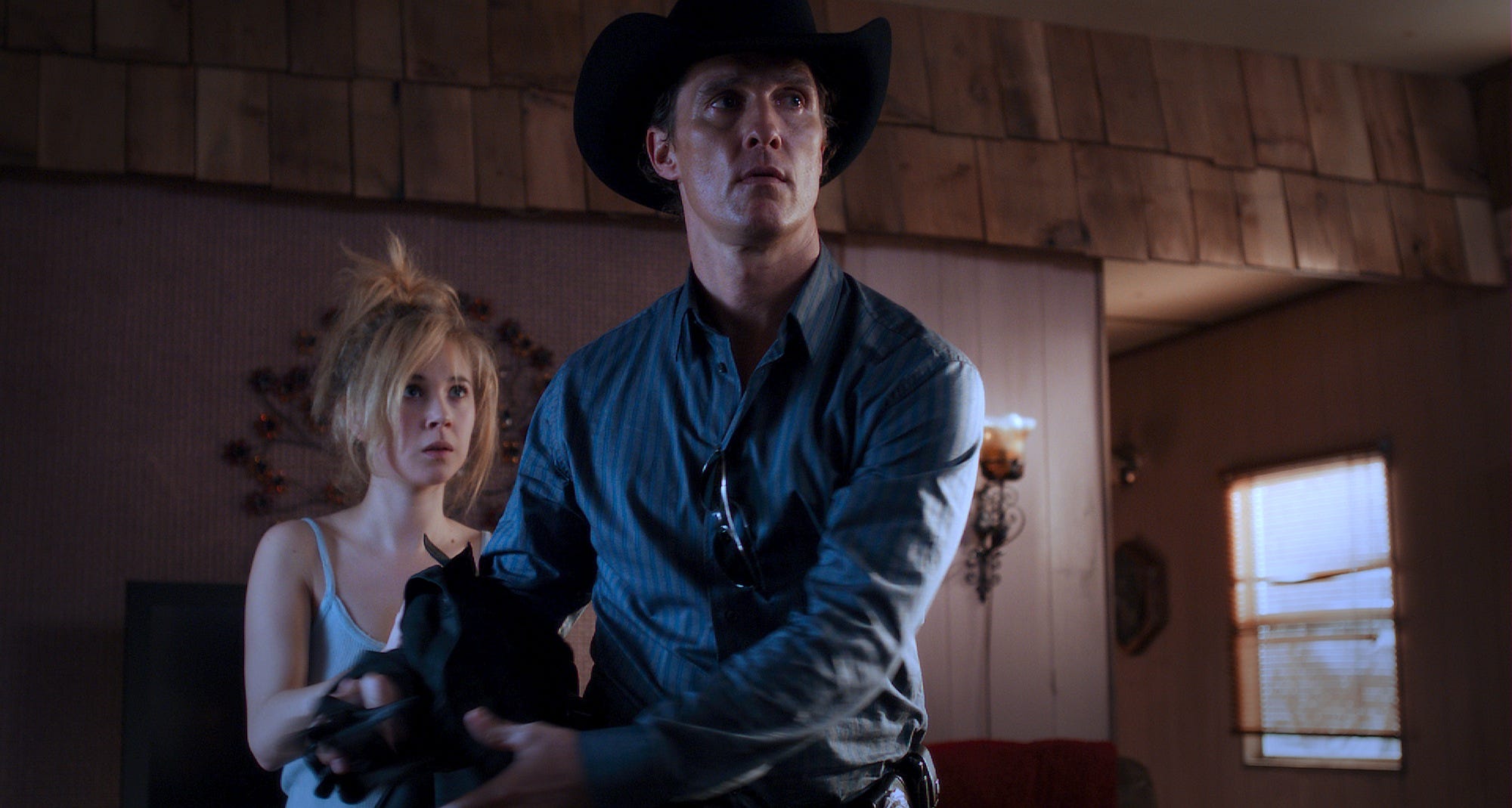
If you want to see any movie that produces strong love/hate reactions from critics and other serious movie watchers, I suggest that Killer Joe is for you. Ty Burr (who recommended it) said, “It’s as mean as a snake.” Anthony Lane (who did not recommend it) said the film is led “…to the brink of abusive farce.” Suppose you are not the type of viewer who enjoys controversial movies. In that case, you may want to be warned off by Lisa Schwarbaum, who said: (Killer Joe) “Throws down a dare by expecting its audience to be the cool connoisseurs of the story’s “comic” outrageousness, then rubbing viewers’ faces in close-up scenes of brutality that reasonable people ought not to be able to watch.” Whatever else Killer Joe is, it is not for the faint of heart. Matthew McConaughey’s genuinely frightening performance as the title character is at the center of that lack of faintness. Joe is a Dallas police detective who side hustles as a contract killer. It is not the worst of his sins. The plot circles around Joe and a trailer park living, white trash family who hire him to off the family mom for her life insurance money. You might ask yourself how anyone so poor could afford a hitman. The answer is that they cannot pay until the life insurance proceeds come through. Joe, being the sociopath he is, offers to take a retainer instead of his usual payment up front. The retainer Joe wants is Dottie, the sister/daughter of the two geniuses whose scheme the murder is. If you think that is perverse, wait until you meet Dottie. She is a pretty little waif who is not all there mentally. The movie suggests that Dottie is flighty, not mentally incompetent. That may be, but no one, least of all Juno Temple, who gives a wonderfully vulnerable performance as Dottie, lets you forget that Dottie is a victim. Dottie is not the only victim. The men in this movie are each, in their own way, stunningly abusive to the women in their lives. Friedkin shoves this fact in the viewer’s face and down our throats in a brutal finale. It is all the harsher for having an ending that does not let the viewer off the hook by offering a convenient moral redemption. The director who made Cruising, The French Connection (🦛🦛🦛🦛), and The Exorcist (🦛🦛🦛🦛), each harsh in their own way, has not lost his mettle in old age. Killer Joe does have its flaws, but that doesn’t stop it from packing a vicious punch. You could argue that if you set aside the brutality, what’s left is a run-of-the-mill, near-mediocre thriller. You might even be right. The script definitely has its weaknesses, except that you cannot separate this movie from its brutality. It is in its DNA. Friedkin makes movies with brutality in their DNA. Honestly, it is what I love about Friedkin’s best movies. The audacity and necessity of the crucifix scene in The Exorcist, the “hero” saying the N-word in The French Connection. Freidkin’s movies live in a world without easy moral distinctions. Here again, it is what makes Killer Joe work in a way that I think many directors would not have been able to achieve. The subverting of expectations extends to the actors. Temple had her big break after this, but most viewers will know her from the tragi-comedy Ted Lasso, where she was the show’s resident ray of sunshine. Here she is, raw and vulnerable, in an exceptional performance. The character of Dottie is mostly one note, and Temple’s performance gives her emotional range. Gina Gershon seems like a more natural fit thanks to her most famous role as one of two smart, scheming femme fatales in the Wachowskis’ clever directing debut Bound (1996) (🦛🦛🦛). Gershon deserved an Oscar nomination for her performance as the trampy stepmother whose impending murder lies at the center of this plot. Gershon’s character requires a wide range of acting. Additionally, I imagine some of her scenes were incredibly difficult to film. The movie’s most horrifying moments would not have been effective if she had not been utterly convincing. McConaughey, who started in Romantic Comedies, has parlayed his talent into serious acting roles, but the fact is, when you think of McConaughey, you think heartthrob. The genius of what he and Friedkin do here is that instead of separating McConaughey from his sexy Texas persona, they ask, What if those hot looks and sexy drawl are the mask of a complete and utter psychopath? McConaughey plays the same sexy guy that made him a perfect romantic lead in RomComs like How to Lose a Guy in Ten Days (🦛🦛🦛🦛), then slowly peels away layer after layer to reveal a monster underneath. It is doubly uncomfortable because McConaughey maintains his sexy persona even in the most horrifying scenes. Thomas Hayden-Church, who often seems to go unnoticed, probably because he is known for playing lovable doofuses, turns in a fine performance as the father. His character is undoubtedly a doofus; he just isn’t a lovable one. Initially, I was unsure if Hayden-Church was overacting. He is not. His performance in the grand finale, for example, takes place in the background but is as essential as those acting in the foreground. Emile Hirsch is the one fly in the acting ointment. I kindly suggest that he is out of his depth. His opening scene with Hayden-Church was where I wondered if Hayden-Church was overacting. It wasn’t long before I observed that, frequently, when Emile Hirsch shared the screen with someone, they suffered as a result. Some parts of Hirsch’s performance do work. His inconsistency has me wondering if some of the blame lies with Friedkin for not providing him with more instruction. This misfire is significant because Hirsch’s character, the son/brother, serves as the hub from which all the events and characters stem, and Hirsch fails to deliver. A more cohesive performance might have pushed the movie to near greatness. I say ‘near’ because, as much as I admire the gutsy ending, it leaves the film without a moral center. Not every movie needs a moral center, but the absence of one here is notable. I am going to close with the words of Margohla Davis, who did not like the movie, so I think she meant her words negatively; however, I see them as a positive affirmation, which to me suggests that, for better or worse, Killer Joe will give you something to talk about. “(Killer Joe) Lurches from realism to corn-pone absurdism and exploitation-cinema surrealism.”
Where to watch
Streaming on Hoopla (If your library supports it). Rent from the usual suspects: Amazon, Apple, and YouTube.
Please share this post with anyone who may enjoy it.
If you’re pining for a more traditional horror movie with a fucked up family as part of the theme, I point you in the direction of Ari Aster’s instant classic: Hereditary (🦛🦛🦛🦛). I would have included it, but I don’t have a review written. In short, it is a stone-cold masterpiece. It features an Oscar-worthy performance by Toni Collette as a mother having a complete (and well-earned) movie-length meltdown. The movie is, by turns, disturbing and terrifying.